
CUSTOM GATES · TRANSIT & FACILITIES
Custom gates.
Transit engineering.
Dudley Gates engineers and fabricates gates around customer access requirements. Dimensions, materials, geometry and hardware are developed through direct collaboration with the project team.
CUSTOM ENGINEERING / TRANSIT APPLICATIONS
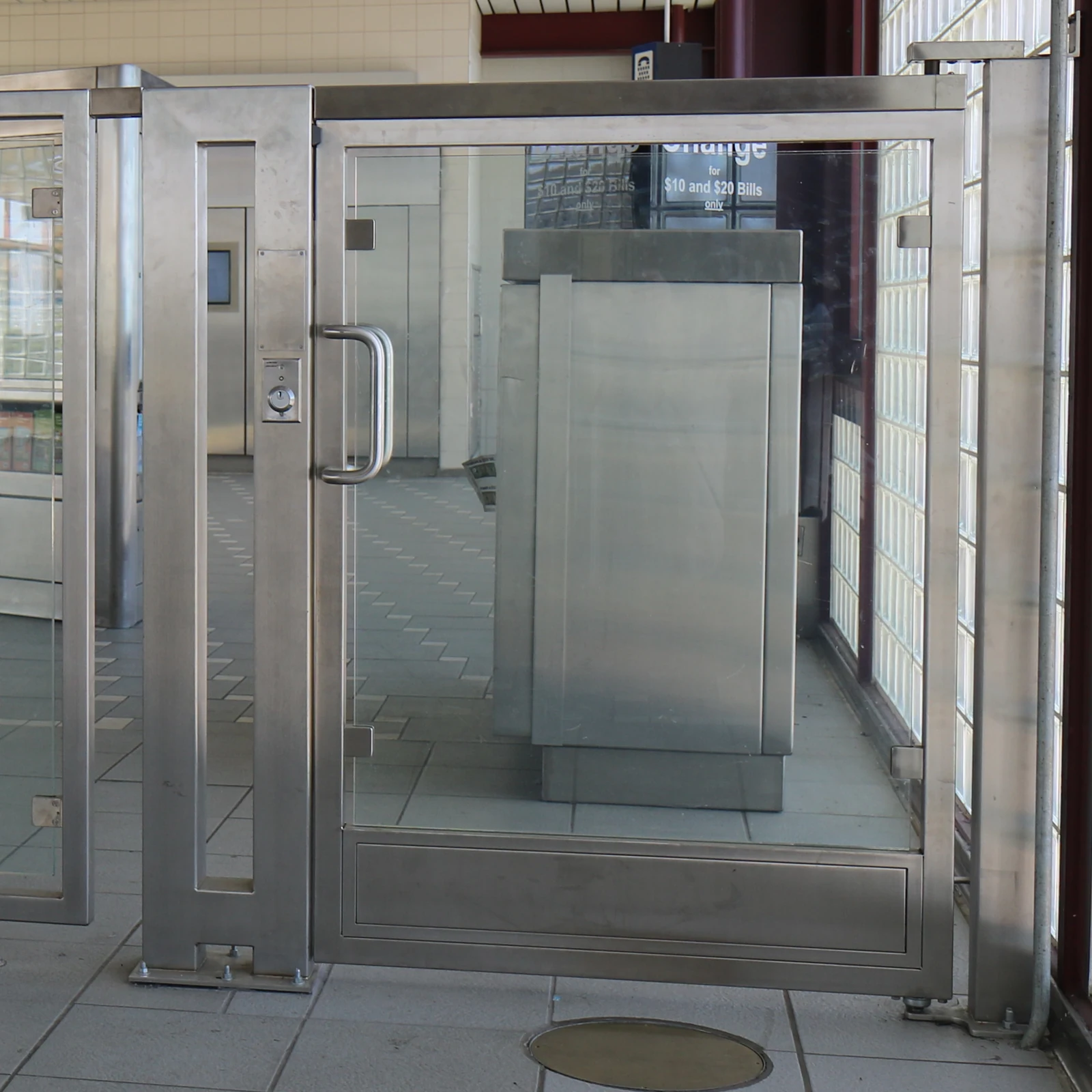
TRANSIT GATE & FENCING
01 / ENGINEERING CONSIDERATIONS
From requirements
to gate design.
Bring an initial concept or a defined access requirement. Work with Dudley engineers to develop gate geometry, materials, mounting and hardware around the application, balancing access, security, installation and service needs.
01
Accessible passage
For accessible passage, develop the clear opening, maneuvering space, operating hardware and closer settings around the applicable ADA requirements.
02
Stainless steel construction
304 or 316 stainless steel, selected for customer requirements. Gate height, width, panel treatment and construction are developed for the project.
03
Above-floor closer
Swing-gate designs using the built-in, above-floor closer provide adjustment access without a recessed floor-closer pocket.
02 / GATE DESIGN EXAMPLES
Examples of custom gate engineering.
Previous gate designs illustrate construction, panel treatments and integration with the site. Project requirements determine the dimensions, materials and engineering details.
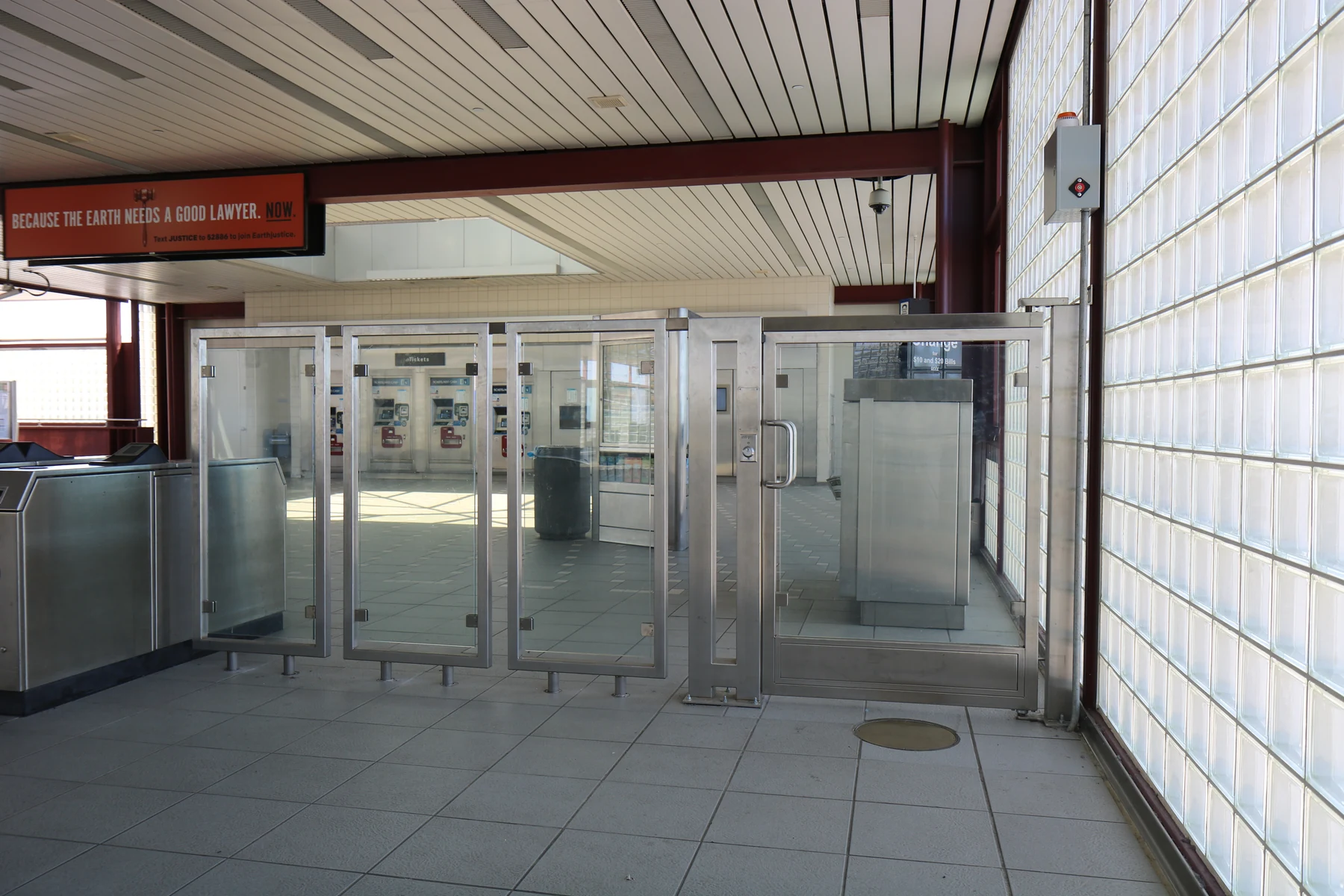
Swing-gate design examples
Clear-panel, picket and solid-body designs show different approaches to visibility and enclosure. They provide starting points for discussing a custom gate.
Clear-panel
Clear polycarbonate panels in a tubular stainless steel frame maintain visibility across the opening.
Picket-style
Vertical pickets in a stainless steel frame define platform boundaries and restricted areas.
Solid-body
A stainless steel door body for applications requiring a solid panel.
CUSTOM FABRICATION
Engineering follows
the application.
A station entrance that closes at night presents different requirements from an accessible fare-control passage or a trackside service opening. Work with Dudley engineers to refine height, width, materials, gate geometry, mounting and locking for the intended use.
03 / INSTALLATION & MAINTENANCE
Built-in closer.
Above-floor access.
For swing-gate assemblies using the built-in closer, the mechanism sits above floor level. This avoids a recessed floor-closer pocket; mounting and anchoring are developed around the slab and site conditions.
For retrofits, that distinction matters where floor finishes or embedded services constrain the work. Plan adjustment access and the applicable inspection and maintenance procedure with the selected gate configuration.
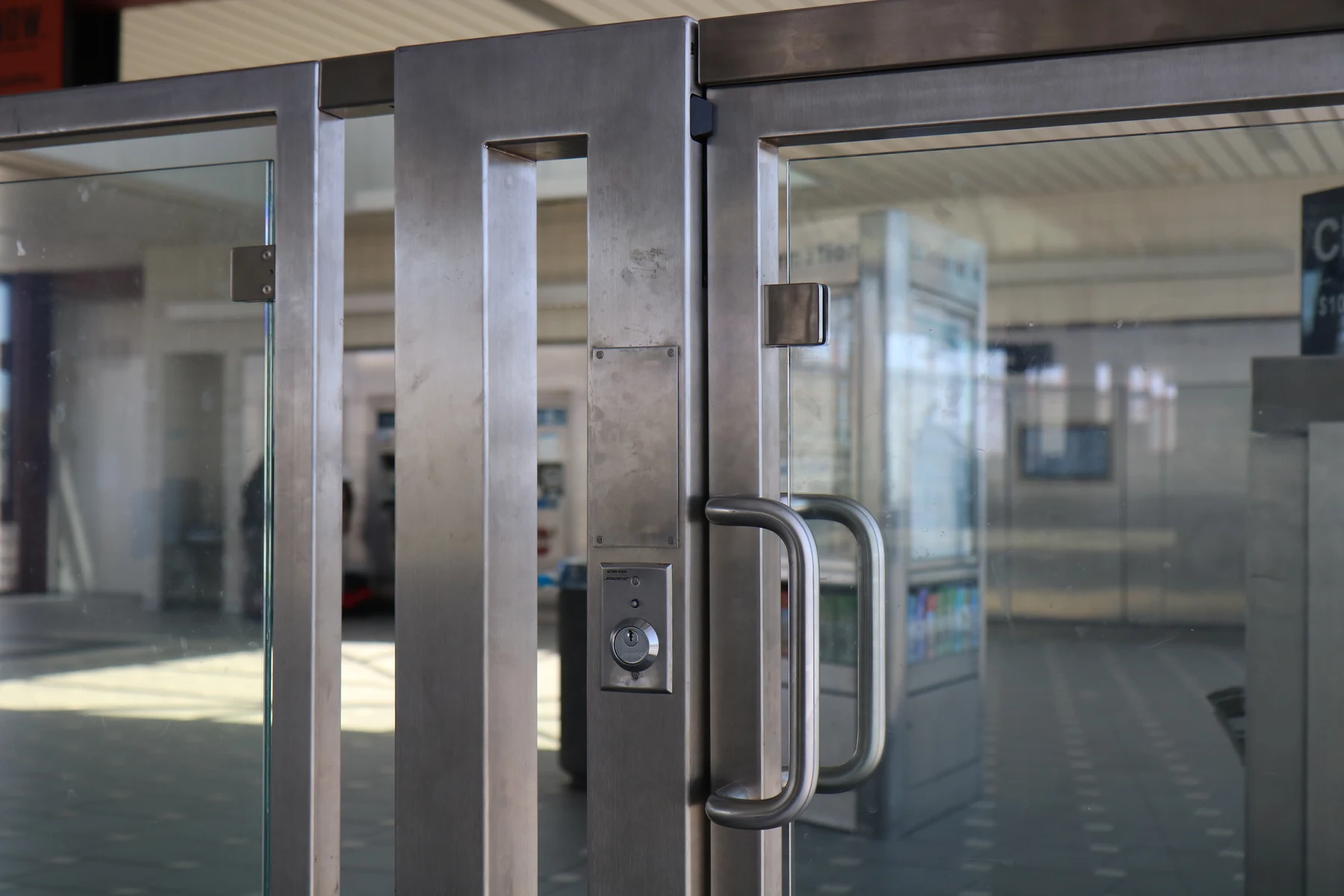
GATE HARDWARE DETAIL
04 / TRAPLOCK
Locking a gate that
swings both ways.
TRAPLOCK is used across multiple gate designs. In a bidirectional swing-gate arrangement, paired retractable catches capture the closed gate and release it for authorized passage in either direction.
The disclosed mechanism directs forced-opening loads through side-loading pads into the post pocket. Specify the lock, access-control inputs, exit arrangement and power-loss behavior together.
05 / APPLICATIONS
Transit applications shape the design.
Fare-control passage
Accessible swing-gate passage alongside fare-control lines. Develop reader authorization, exit controls and emergency operation around the station requirements.
Station closure
Custom gates to restrict station entrance access outside operating hours. Coordinate gate height, locking, adjoining barriers and required exit arrangements with the transit agency.
Trackside & facility access
Gates for controlled access to trackside service areas and commercial facilities. Develop the geometry around the opening, adjacent structures and authorized access requirements.
Each application starts with customer requirements and is refined with the engineer.
06 / TECHNICAL PLANNING
From concept
to coordinated design.
For specifiers & facilities teams
Start with the access function, an initial concept or site drawings. Review the opening, adjacent architecture, controls and accessibility requirements with the engineer to finalize the gate design.
U.S. Access Board: entrances, doors and gates ↗
For installers
Use the agreed gate configuration and drawings to coordinate mounting, installation and service access. Request the applicable installation and maintenance information for the assembly.
DUDLEY GATES, INCORPORATED
Transit gate engineering
since 1999.
Founded in 1999, Dudley Gates developed its double-acting swing gate to address accessible passage in rail transit, with a built-in, above-floor closer.
Dudley gates installed at BART stations in 2000 remain installed today. Most gates are custom engineered, with shared components such as TRAPLOCK used across different designs.
PROJECT & TECHNICAL INQUIRIES
Discuss your gate project.
Share your requirements, initial concept or available drawings. Work with Dudley engineers to refine the gate design, dimensions, materials, locking and installation details for your site.